
Best practices for handling returns in e‑commerce

In online commerce, returns are inevitable. But the way they are managed makes all the difference, both in costs and in customer perception. An effective approach means more than fast processing; it also requires visibility, organization, and the ability to learn from every return.
Over 30% of products purchased online are returned, and 60% of online shoppers say they check the return policy before completing an order. A well‑designed return process is one of the most important elements of the customer experience. It may seem counterintuitive, but a return policy that respects your customers’ time and decisions can actually boost sales.
Although returns are often seen as an operational challenge, they can be turned into a real advantage for your business – and this guide shows you how. We’ll explore concrete strategies and best practices you can use to build a return policy that inspires trust and strengthens your brand’s reputation.
Why are returns so important?
👍 Deliver a positive customer experience: A simple and clear return process can build customer loyalty. 96% of shoppers say they would order again if returns are hassle‑free. Returns should not be seen as a loss, but as an opportunity to strengthen the customer relationship.
⭐ Influence the seller’s rating: Nearly 50% of negative reviews are caused by difficulties in getting a refund or unclear policies. Considering that 95% of customers read reviews before making a purchase, efficient return management is vital.
💯 Maintain inventory accuracy: Properly managed returns provide a realistic view of stock levels, reducing the risk of overselling or running out of products.
📈 Control costs: For each return, combined costs – logistics, labor, shipping, and refunds – can reach tens or even hundreds of dollars. Without an efficient process, these costs become unsustainable.
How do you calculate the return rate?
Formula: Return rate (%) = (Number of products returned / Total number of products sold) × 100
Example: If you sold 100 products and 20 were returned, the return rate is 20%.
Key question: What is an acceptable return rate for your business, and when should you optimize?
How much do returns cost? The impact on budget and operations
Returns have a significant impact on profitability and warehouse processes.
The top 5 factors that generate costs in the return process:
- Inspection and quality control of returned products
- Transportation and delivery costs
- Processing and identification of returned items
- Depreciation of products that can no longer be sold as new (Grade A)
- Cleaning, refurbishment, and preparation of products for resale
Impact on warehouse processes
Returns don’t just create additional costs – they also disrupt inventory management and product availability.
Each returned product involves:
- Additional transportation
- Time‑consuming processing and inspection
- Storage space until resale or disposal
Inefficient return management or a backlog of unprocessed requests can lead to inventory errors, affecting warehouse resources and overall profitability.
Environmental impact
The ecological impact of returns – emissions from transportation and discarded packaging – often goes unnoticed: more than 80% of consumers are unaware of how much it affects the environment.
A study by the University of Bamberg shows that a single returned product generates around 1.5 kg of CO₂ equivalent. In 2021, with 530 million returns, the carbon footprint was equal to 5.3 billion kilometers driven by car. Every avoided return makes a real contribution to protecting the environment.
Returns in e‑commerce: where do the biggest bottlenecks occur?
📦 Transportation costs: Free returns attract customers but increase financial pressure on the business. More affordable return methods can be offered free of charge, while the more expensive ones remain paid, encouraging more sustainable choices.
🔄 Restocking fees: Inspection and repackaging costs are deducted from refunds, but this can discourage customers who only want to try the product, especially in areas like fashion or make‑up, where testing is part of the experience.
➡️ Loss of value in returned products: Opened, seasonal, or damaged products lose between 10–20% of their value. This depreciation directly impacts profitability.
💻 Aligning internal systems with real stock: Discrepancies between physical and digital inventory can lead to missed sales or overselling. An integrated system, such as xTrack WMS, synchronizes data in real time and provides full visibility over inventory, a crucial step toward operational efficiency and more reliable business decisions.
What does a well‑designed return policy look like?
A clear policy is the foundation of an effective return strategy. It sets customer expectations and gives your team a framework for action.
What should your return policy include?
✅ Eligibility: Which products can be returned and which cannot
✅ Timeframe: How long customers have to return a product (e.g., 30 days)
✅ Conditions: Must products be unused, in their original packaging, etc.?
✅ Resolution options: Refund, store credit, or exchange
✅ Return costs: Who covers the shipping costs?
💡 Recommendation: Make sure your return policy is easy to find on your website, ideally on the checkout page and in post‑purchase emails.
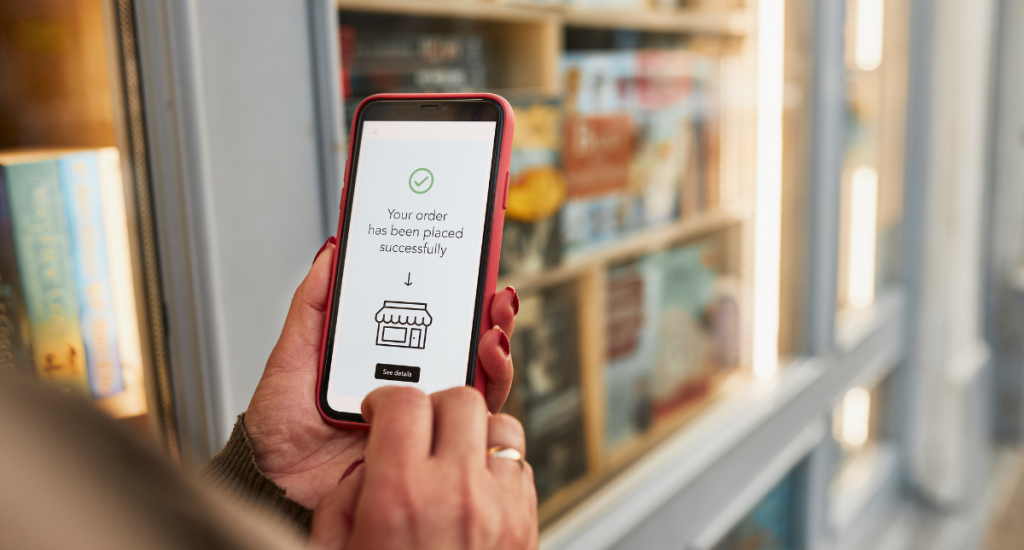
Essential steps for a simple and fast return
1️⃣ Initiation: The customer should be able to start the return easily. A self‑service portal or an RMA (Return Merchandise Authorization) system allows them to submit the request online without waiting for email replies.
2️⃣ Approval: Use the RMA system to automatically verify return eligibility. Warranty issues or wrong orders? The software can quickly approve requests.
3️⃣ Shipping: Provide clear instructions for packaging and delivery. Printable return labels make the process easier.
4️⃣ Processing: Once received, inspect the product promptly to decide whether it qualifies for a refund or exchange.
5️⃣ Resolution: Refund, replace, or offer store credit. Complete this step quickly to leave a positive impression.
How to organize returns so you don’t lose time and money
1️⃣ Offer a better pre‑sale experience
Every online retailer wants to reduce the return rate. One of the most effective ways is to improve the customer experience before purchase. The more useful information and support you provide in helping customers choose the right product, the lower the chances it will be returned.
What you can do in practice:
- Make sure product descriptions are accurate and up to date.
- Include clear, easy‑to‑find information such as FAQs.
- Display exact measurements and easy‑to‑read size charts (especially for fashion and accessories).
- Add videos or 3D/360° illustrations that show the product in real contexts.
- For furniture or décor, provide 3D mock‑ups that simulate the product in the customer’s space.
- Display contact details or a chatbot clearly for pre‑purchase questions.
2️⃣ Ensure the return policy is visible and easy to understand
Managing expectations correctly starts with a clear, accessible return policy.
Recommendations:
- Include a link to the return (and delivery) policy on every product page or at least in the header/footer.
- Add the link in order confirmation emails and post‑purchase notifications.
- Create a simple FAQ that explains the return policy step by step.
3️⃣ Learn from best practices of major retailers
Retailers like Amazon, H&M, and Asos set the standards in e‑commerce. To stay competitive and aligned with customer expectations, it’s worth analyzing their approaches.
Amazon offers free returns for most products shipped in the US, a practice that helps secure its position as a leader among retail websites.
However, free returns are not an absolute rule. 79% of fashion retailers (including H&M) now charge a return fee, signaling a shift in the industry.
As environmental concerns grow, more consumers avoid unnecessary returns, including the habit of ordering multiple versions and keeping only one.

Reverse logistics: how to manage returns and restock products
“Reverse logistics” is not just a sophisticated term – it is the foundation of an effective return solution. This process covers everything: from transporting returned products back to the warehouse, to restocking or disposing of them.
Why reverse logistics matters
- Cost reduction: An efficient system minimizes losses and maximizes value recovery.
- Sustainability: Customers value eco‑friendly brands, and an optimized return process reduces environmental impact.
- Useful data: Return analysis helps identify patterns, product defects or gaps between expectations and reality.
A WMS (Warehouse Management System) can be used to reduce the number of wrongly shipped products and to manage returns once they arrive back at the warehouse (if they don’t need to be sent to the supplier). But not only errors generate returns. Customers may cancel an order even after products have left the warehouse but before delivery. In such cases, drivers can use POD (Proof of Delivery) solutions in the field, which support both deliveries and cancellations, as well as reverse logistics for collecting returns.
There are also situations where manufacturers discover that products placed on the market have defects that endanger users (e.g., cars with brake problems, airplanes with faulty software, phones with dangerous batteries, food products with harmful ingredients). In these cases, they are required to recall items to comply with consumer protection regulations and, equally important, to maintain customer trust.
Producers or 3PL (third‑party logistics) providers also focus on recovering returnable packaging (pallets, crates, containers) used during product transport, so they can be reused multiple times through reverse logistics. Recovering such packaging minimizes replacement costs and ensures stock availability, offering greater flexibility and shorter delivery times.
In manufacturing, reverse logistics ensures that waste generated by technological processes, scrap or unusable materials, is sent for recycling. Monitoring scrap and rework is the first step in activating reverse logistics not only for recycling or reuse, but also for safe disposal of unusable waste.
And the examples go on. In essence, the ultimate goal of reverse logistics is to recover goods that can later be reused, replaced, refurbished, resold (either fully or as spare parts), recycled, or disposed of.
Efficient use of Supply Chain software solutions, combined with hardware tools, allows companies to significantly reduce costs associated with return processing. By optimizing return management processes, losses of time, human effort, and material resources are reduced, while the speed of return processing increases. This way, companies achieve substantial savings while gaining superior efficiency in managing returns.
How does xTrack WMS help simplify e‑commerce processes?
In the fast pace of online commerce, success is not just about selling – it’s about delivering the right product, at the right time, with as little friction as possible. This is where xTrack WMS, a warehouse management system, comes in. From inventory organization to fast delivery, xTrack WMS addresses the most common bottlenecks.
Bring order to complexity: From thousands of SKUs to constantly changing stock levels, xTrack WMS helps companies manage inventory with precision and confidence.
Ensure speed and accuracy: Automated picking, packing, and shipping flows reduce errors and accelerate order processing.
Support scalability: Whether you handle 100 or 10,000 orders per day, xTrack WMS adapts to growth without losing control.
Connect all touchpoints: xTrack WMS links e‑commerce platforms, couriers, and return systems, creating a seamless flow from checkout to delivery and back.
Enable smarter decisions: Real‑time data on inventory, returns, and warehouse performance helps teams optimize space, staff, and stock levels.
🔁 And when it comes to returns…
xTrack WMS is not just about outbound logistics. It plays a key role in return management by:
- Recording returned products and matching them with original orders
- Processing multiple returns simultaneously through automated or operator‑assisted systems
- Automating inspection and restocking processes
- Updating inventory in real time
- Providing insights into return patterns and recurring product issues
Since returns involve multiple departments, not only logistics but also customer support, finance, marketing, and product teams, xTrack WMS helps remove barriers by:
- Shared visibility: Support, finance, and planning teams all have real‑time access to return data: volume, reasons, and product status.
- Reducing manual transfers: Automated workflows replace emails, spreadsheets, and delays between teams.
- Proactive decisions: If a product sees a surge in returns due to sizing, marketing can adjust descriptions and procurement can review supplier specifications, all based on WMS data.
In this way, xTrack WMS becomes more than a logistics tool. It is a strategic platform that connects operations with the customer experience.

What are the benefits of using xTrack WMS for return management?
- Improved accuracy: Eliminates manual errors in tracking and processing returns.
- Increased efficiency: Automated workflows reduce processing time and free up resources.
- Better customer experience: Fast refunds or replacements boost satisfaction.
- Cost reduction: Optimizing the return process minimizes losses.
In e‑commerce, returns say a lot about a brand. The way they are managed can turn a difficult experience into a moment of loyalty. It’s worth seeing them as part of your growth strategy.
At Axes Software, we provide integrated solutions for managing returns and reverse logistics processes – from delivery confirmation (POD) and efficient transport (TMS), to packaging (Packaging System), scrap management (MES), and full warehouse traceability (WMS). And if you need clarity in processes or want to optimize collaboration between teams, we’re here with dedicated expertise and consultancy.
Contact us using the form below!

